



You could spend midnight beneath Iceland's luminous sky, find yourself in a Chinese city where the sun doesn't reach its highest point until three in the afternoon, or arrive on a tropical island that keeps its own time. You could even miss your cruise ship because your phone shows a different time than the clock on board. As Europe prepares to turn its clocks back on October 25, 2026, we're taking you on an extraordinary journey through countries that don't observe daylight saving time. Along the way, we'll cross several continents, encounter borders where clocks disagree on what time it is, and discover how an insect enthusiast became part of the history of longer summer evenings.
Saturday evening in Istanbul. You've taken a ferry across the Bosphorus, wandered through the narrow streets of Karaköy, and stayed by the waterfront long enough to watch the city lights shimmer across the strait. The next morning, October 25, 2026, you wake up to discover that Istanbul and Sofia are now an hour apart. The day before, there was no time difference at all. Turkey hasn't changed its clocks. Bulgaria, however, has turned its clocks back, putting Istanbul one hour ahead. Ferries continue crossing the Bosphorus, fishermen on the Galata Bridge wait for their next catch, and the sun rises over the city according to the same natural rhythm it followed yesterday.
Strange as it sounds, this is only the beginning of a rather complicated global story. On October 25, most European countries will return to standard time. In Bulgaria, clocks will move back from 4:00 a.m. to 3:00 a.m. In the United States, the seasonal change will take place one week later, while parts of Australia have already entered daylight saving time. Around 70 countries observe daylight saving time in at least part of their territory in 2026, but many more don't change their clocks seasonally. Some abandoned the practice decades ago, others changed their policies quite recently, and in certain places, the rules are unusual enough to confuse even a well-prepared traveler.
Advertisement
Turkey Hasn't Changed Its Clocks Since 2016. Europe Still Does
Ten years ago, Turkey decided to end its seasonal clock changes and remain on UTC+3 year-round. Since 2016, Istanbul, Ankara, Izmir, and Antalya have kept the same time throughout every season. That means Bulgaria and Turkey share the same time during the summer, but Turkish cities are one hour ahead in winter. If you fly to Istanbul in July, there's no need to adjust your watch. Make the same trip in December, however, and you'll need to account for the difference, especially if you've booked an airport transfer, an excursion, or a business meeting in advance.
Neighboring countries don't always follow the same timekeeping rules, and Istanbul offers one of the closest examples you'll encounter when traveling from Bulgaria. Things become even more interesting if you continue east. There, you'll discover a country so vast that its geography spans five time zones, yet for decades it has insisted that its entire territory follow a single official clock.
China: Five Geographical Time Zones, One Official Time, and Lunch at 3 p.m.
China is difficult to explore in a single trip. Nearly 4,800 kilometers separate the skyscrapers of Shanghai, the imperial palaces of Beijing, and the ancient trading cities of western China. That's enough distance to cross several time zones if they followed the country's geographical layout. Yet the clocks continue to show the same official time everywhere. China operates entirely on UTC+8, whether you're standing on the Pacific coast or traveling near its borders with Central Asia. The decision to establish a single national time was made in 1949. Between 1986 and 1991, the country experimented with daylight saving time before eventually abandoning it.
To appreciate just how unusual this system is, head to Kashgar, an ancient city along the historic Silk Road. Here, the landscapes, architecture, and markets reflect the distinctive cultural influences of Central Asia. As you explore the old neighborhoods and look for somewhere to have lunch, you may notice something unexpected: the sun doesn't reach its highest point in the sky until around 3:00 p.m. Beijing time. Three in the afternoon, yet the sun is positioned where Europeans would normally expect to see it around midday. Back in Beijing, the afternoon is already well underway.
Local residents have found ways to adapt. In Xinjiang, some people use an unofficial local time that runs two hours behind Beijing time. If you arrange to meet a local guide at 10:00 a.m., make sure you clarify which time system they're using. Otherwise, you could arrive two hours early or two hours late. This is one of those places where GPS navigation might lead you to the correct address, while your watch offers surprisingly little help in figuring out when you're supposed to be there.
Advertisement
Japan: Why Does the Sun Rise as Early as 4:25 a.m. in Tokyo?
After China's unusual timekeeping arrangements, Tokyo feels like an entirely different world. Trains arrive with remarkable precision, the enormous city is constantly in motion, and its neighborhoods reveal everything from modern skyscrapers and traditional temples to tiny restaurants tucked away along busy streets. Japan doesn't change its clocks during the year either, although that hasn't always been the case. Between 1948 and 1951, during the period following World War II, the country observed daylight saving time. In 1952, it returned to Japan Standard Time (UTC+9), which has remained in place ever since.
In June, the sun rises in Tokyo at around 4:25 a.m. While much of the city is still asleep, daylight has already begun spreading across the streets. If you're in Kyoto, that's an excellent reason to get up early and make your way to Fushimi Inari Shrine, famous for its thousands of red torii gates. During the first hours of the morning, you have a chance to enjoy a quieter atmosphere before the larger tour groups arrive. The same is true of the traditional streets of Higashiyama, which have an entirely different character before the shops open. Japan doesn't move its clocks forward to create more evening daylight, but for travelers who enjoy an early start, those bright mornings can be a wonderful advantage.
Bali and the Maldives: Near the Equator, the Clocks Stay Put
After the bustling streets of Tokyo, it's time to head south. In Bali, you can begin your morning among the rice terraces near Ubud, visit one of the island's temples, and spend the afternoon on a beach overlooking the Indian Ocean. The seasons here are nothing like those in Europe. There are no winter days that end in the late afternoon or summer evenings when the sky stays bright until nearly midnight. Being close to the equator means the length of the day remains relatively consistent throughout the year. Indonesia doesn't observe daylight saving time, and neither do Thailand, Malaysia, Singapore, or the Maldives.
That doesn't mean the timing of your trip is unimportant. In Bali, the rainy season can disrupt plans for a volcanic hike or a day at the beach, while Thailand's different coastlines have their own seasonal weather patterns. At least there's no Sunday in spring when you have to move your clocks forward or Sunday in fall when you turn them back. In the Maldives, however, another surprise awaits, one that has nothing to do with the seasons. After a long flight to Malé, you board a seaplane, and beneath you, small islands, white beaches, and lagoons in extraordinary shades of blue begin to unfold. When you arrive at your resort, you drop off your luggage and decide to check what time dinner is. Your phone says 5:30 p.m., but at the hotel, it may already be 6:30 p.m.
There's nothing wrong with your phone, and you haven't crossed into another international time zone. Some resorts in the Maldives use their own unofficial "island time," usually one hour ahead of the country's official time. One example is Conrad Maldives Rangali Island, where the daily schedule is arranged to give guests more convenient evening hours for their activities. Of course, the sun doesn't set any later because of the hotel's clock. But if you've booked a seaplane transfer, make sure you know whether the departure time is based on official local time or resort time. Otherwise, after several carefree days on a tropical island, you may find yourself rediscovering the importance of a precise schedule rather quickly.
Advertisement
Lord Howe Island: The Australian Paradise That Changes Its Clocks by Just 30 Minutes
From the Maldives, we continue toward Australia, but instead of heading to Sydney or Melbourne, we're searching for a small island in the Tasman Sea. Lord Howe Island lies about 600 kilometers east of mainland Australia and is known for its lagoon, coral reefs, mountain peaks, and remarkable natural environment. From the shores of the lagoon, you can take in views of Mount Lidgbird and Mount Gower, while the island's limited tourism development makes it particularly appealing to travelers who prefer unspoiled nature to sprawling resort complexes. Yet there's another unusual feature here that you're unlikely to notice on a postcard.
Lord Howe Island changes its clocks by just 30 minutes. Yes, half an hour. On October 4, 2026, the island moved its clocks forward from 2:00 a.m. to 2:30 a.m., having turned them back by the same half hour in April. Australia is already a fascinating place when it comes to time zones. Sydney and Melbourne observe daylight saving time, while Brisbane and Perth do not. Adelaide, meanwhile, operates on a time zone that differs from Sydney's by 30 minutes under their respective seasonal arrangements. If you combine several Australian states in one journey, you may encounter time differences of an hour, an hour and a half, or even more between cities. On Lord Howe Island, though, you'll probably want to spend more time admiring the lagoon and mountains than checking the clock. At least until it's time for your return flight.
Advertisement
Chile and Patagonia: Among the Glaciers, the Clocks Stay the Same
Our next stop takes us across the Pacific Ocean to South America. Chile stretches from the arid landscapes of the north to the glaciers and fjords of Patagonia, where some of the continent's most spectacular scenery awaits. If you've dreamed of seeing the granite towers of Torres del Paine, vast lakes, and mountain valleys, you'll probably organize your itinerary around the weather, wind, and hiking conditions. But you'll also want to check the time zone. In the capital, Santiago, and most of Chile, seasonal clock changes are still observed, while the southern regions of Aysén and Magallanes remain on UTC−3 year-round.
That means the time difference between Santiago and the southern regions changes during certain parts of the year. It can be an important detail when arranging domestic flights, national park transfers, or guided excursions. But once you reach Patagonia, you'll probably have other things on your mind. You might have planned your route down to the last minute and chosen the exact hour when you want to photograph the mountain peaks. Then clouds sweep across the granite walls, the wind picks up, and your entire schedule has to change. It's moments like these that reveal why traveling through Patagonia demands more patience and flexibility than the distances on a map might suggest.
Arizona and Mexico: Where in North America Do the Clocks Stay the Same?
After Patagonia's cool landscapes, it's time for a dramatic change in climate. Imagine a long road trip through Arizona, surrounded by red rock formations, sweeping deserts, and national parks. Summer temperatures in Phoenix frequently exceed 104°F (40°C), and an additional hour of daylight in the evening isn't always considered particularly desirable. Most of the state doesn't observe daylight saving time. The same is true of Hawaii, although its geographical conditions are very different. Most other U.S. states, however, continue to change their clocks in spring and fall.
Arizona has an exception that can turn an ordinary road trip into an unexpected geography lesson. The Navajo Nation observes daylight saving time because its territory extends into neighboring Utah and New Mexico. The Hopi Reservation, located within Navajo Nation territory, doesn't observe it. As a result, you can cross between areas with different timekeeping rules without ever leaving Arizona. If you've arranged an excursion with a local guide, don't rely entirely on the time your phone sets automatically.
A similar story awaits south of the U.S. border. In 2022, Mexico eliminated seasonal clock changes across most of the country. Mexico City, Cancún, and the Riviera Maya no longer change their clocks, but Baja California and certain northern border areas continue to follow the U.S. daylight saving schedule. Tijuana, for example, keeps its clocks aligned with neighboring California, while the state of Sonora doesn't observe daylight saving time, just like Arizona. If you take an extended road trip through northern Mexico and the American Southwest, you'll discover that timekeeping rules don't always follow geographical boundaries the way you might expect.
Canada in 2026: Vancouver, Calgary, and Winnipeg Stop Changing Their Clocks
Continue north, and you'll encounter some of the biggest changes to timekeeping in 2026. Three Canadian provinces, British Columbia, Alberta, and Manitoba, have decided to end seasonal clock changes. On November 1, clocks in Vancouver, Calgary, and Winnipeg will not be turned back. British Columbia adopted permanent UTC−7 across most of the province following the spring time change in March, although certain areas retain their own local arrangements. Alberta chose permanent UTC−6, known as Alberta Time, while Manitoba decided to remain on UTC−5 throughout the year.
If you're planning a trip across Canada, these developments are worth keeping in mind. You could begin in Vancouver, where mountains rise near the Pacific Ocean, continue toward Banff National Park and Lake Louise, and then fly to Toronto. Along the way, you'll encounter different landscapes, climates, and time zones, but now you'll also need to account for the new rules adopted by individual provinces. Toronto and Montreal continue to observe daylight saving time, while Vancouver, Calgary, and Winnipeg have chosen a different approach. Meanwhile, the Canadian fall will continue painting the forests in brilliant colors, the first snow will settle on mountain peaks, and the days will gradually grow shorter. Timekeeping policies can change within a matter of months. The seasons, however, will continue following their familiar cycle.
The Caribbean: How a One-Hour Difference Could Leave You Watching Your Cruise Ship Sail Away
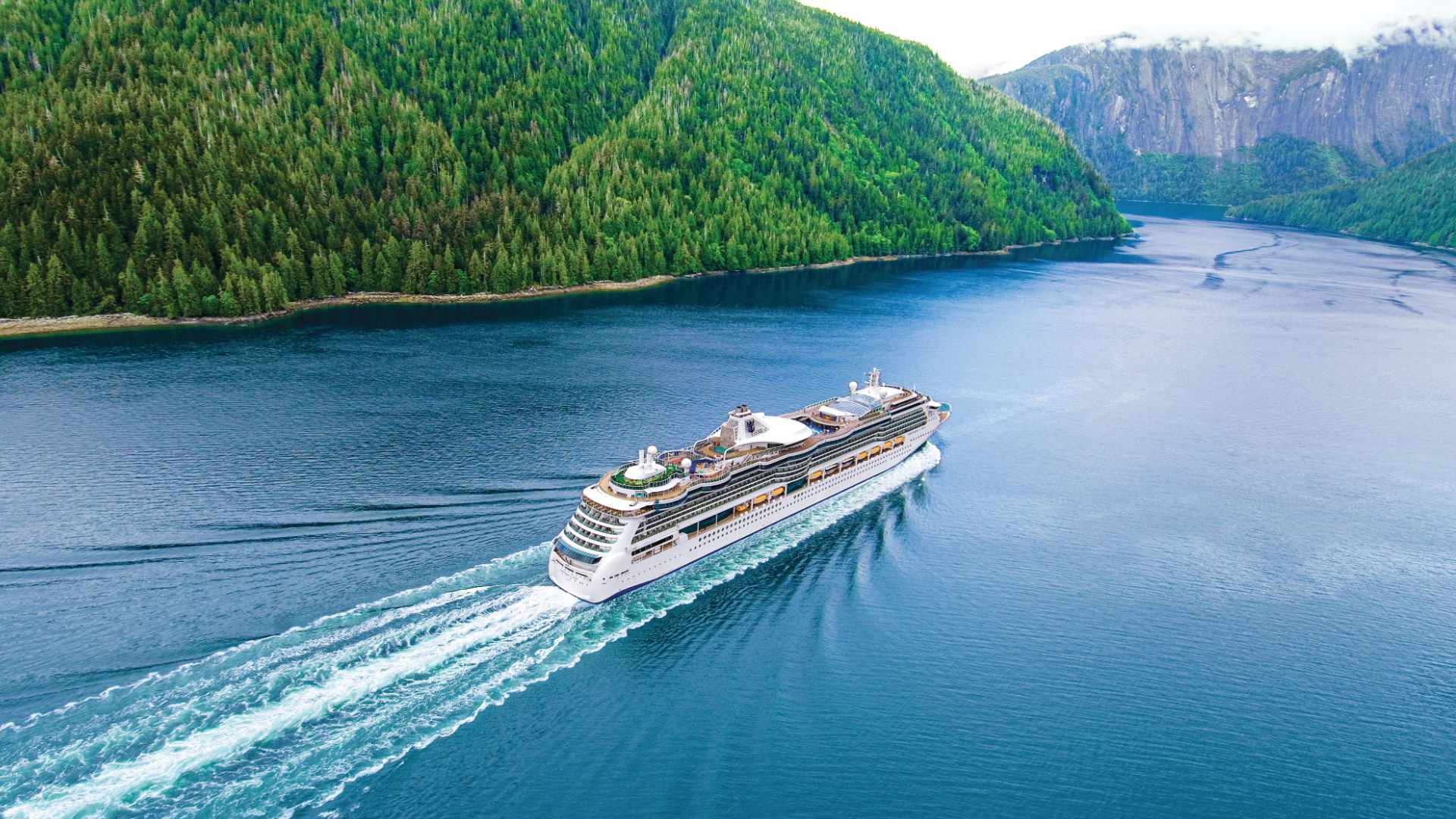
After the Canadian mountains, let's trade the scenery for the Caribbean Sea. You wake up aboard a cruise ship, open the curtains, and discover a new island outside your window. After breakfast, you head ashore, where local guides, excursions, beaches, and several hours of exploring await. Time slips by, and before long, you need to make your way back to the port. Your phone says 4:00 p.m., and the ship is scheduled to depart at 5:00 p.m. You're convinced you have plenty of time. Except that on board, it may already be 5:00 p.m., because ship time doesn't always match local time.
This is a real consideration on certain cruise itineraries, and it's especially important in the Caribbean, where neighboring islands may follow different timekeeping rules. Barbados, Antigua and Barbuda, Saint Lucia, Grenada, Jamaica, the Dominican Republic, and Saint Kitts and Nevis don't observe seasonal clock changes. Cuba and the Bahamas, however, continue to move their clocks forward in spring and back in fall. If you're taking a cruise that visits several of these destinations, make sure you check not only the local time but also the return-to-ship time specified by the cruise line.
Saint Kitts and Nevis offers a particularly interesting example. The island nation stays on UTC−4 throughout the year. During the U.S. daylight saving period, its clocks match those in New York. When New York returns to standard time, Saint Kitts and Nevis suddenly finds itself one hour ahead. Nobody on the islands has changed a clock. If you've gone ashore to visit the historic Brimstone Hill Fortress, explore Basseterre, or spend a few hours on the beach, you probably won't be thinking about that time difference. But before heading too far from the port, check the ship's instructions. The captain isn't going to rearrange the departure schedule to accommodate your phone's time zone.
Iceland: Bright Summer Nights, Four-Hour Winter Days, and No Daylight Saving Time
After the tropical islands, we're heading north again, this time to Iceland. If you arrive in Reykjavík in June, you can head out for an evening walk along the harbor, pass the Harpa Concert Hall, and continue toward the waterfront sculpture known as the Sun Voyager. The sky is still bright, and the city seems in no hurry to end the evening. You glance at your watch and realize it's almost midnight. In June, the sun sets close to midnight in Reykjavík, and the brief twilight leaves the sky illuminated for nearly the entire night. Travel farther north to Grímsey Island, which crosses the Arctic Circle, and you can experience the true midnight sun during part of the summer.
In December, the same country looks completely different. Reykjavík receives only about four hours of daylight, and the sun stays low above the horizon. There's limited time for sightseeing and exploring natural attractions in daylight, but the long, dark evenings offer excellent opportunities to see the Northern Lights when conditions cooperate. Despite these enormous seasonal differences, Iceland doesn't change its clocks. Its last seasonal clock change took place in 1967, and since April 1968, the country has remained on Greenwich Mean Time (GMT) year-round.
Interestingly, when Bulgaria returns to standard time, its time difference with Iceland shrinks from three hours to two. Nothing changes in Reykjavík. If you're planning a road trip around Iceland, checking sunrise and sunset times will be far more useful than relying on your usual sense of morning and evening. In summer, you can linger beside waterfalls, volcanic landscapes, and black sand beaches late into the evening. In winter, you'll need to plan your itinerary carefully around the short daylight hours. Here, your watch might say midnight while the sky is still almost bright. Or it might say afternoon when it's already time to prepare for darkness.
Of Clocks, Sunrises, and Those Moments When You Forget What Time It Is
If you picture all these places on a map, you'll see just how differently we've chosen to measure time around the world. In China, a single official time zone covers an enormous territory where the sun rises and sets at dramatically different hours. In the Maldives, some hotels follow their own timekeeping arrangements. In Arizona, you can encounter different clock rules without leaving the state. On Lord Howe Island, a half-hour adjustment is enough for the seasonal change, while in Iceland, summer brings almost continuous daylight and winter leaves only a few hours for exploring beneath the daytime sky.
All these differences have historical, geographical, and practical explanations. Time zones help us coordinate transportation, business, and everyday life, while daylight saving time shifts the hours of available daylight relative to our usual schedules. But no government decision can change the length of a day or the Earth's journey around the sun. In Patagonia, the wind will continue to pick up regardless of your excursion schedule. In Bali, the sun will set at roughly its familiar seasonal hour, and Iceland's summer nights will remain bright whether anyone decides to move the clocks forward or back.
Perhaps that's why some of the best moments of traveling happen when you stop checking the time. When you stay a little longer by the ocean because the light is beautiful. When you wake up early to see an unfamiliar city before the larger tourist crowds arrive. When you pull over because the view deserves more time than you had planned. Or when you decide to wait for the clouds to clear from a mountain peak you've traveled thousands of miles to see.
And the next time you glance at your watch while traveling, remember Kashgar, where the sun can reach its highest point at three in the afternoon, Iceland's luminous summer nights, or the resorts in the Maldives that keep their own time. The world is full of places where the same hour can mean an entirely different experience. And sometimes, it's worth leaving your watch in your pocket and staying just a little longer wherever you are.











Comments (0)
No comments yet.