
![Български [BG]](/media/mod_languages/images/bg_bg.gif "Български [BG]")
![English [EN]](/media/mod_languages/images/en_gb.gif "English [EN]")
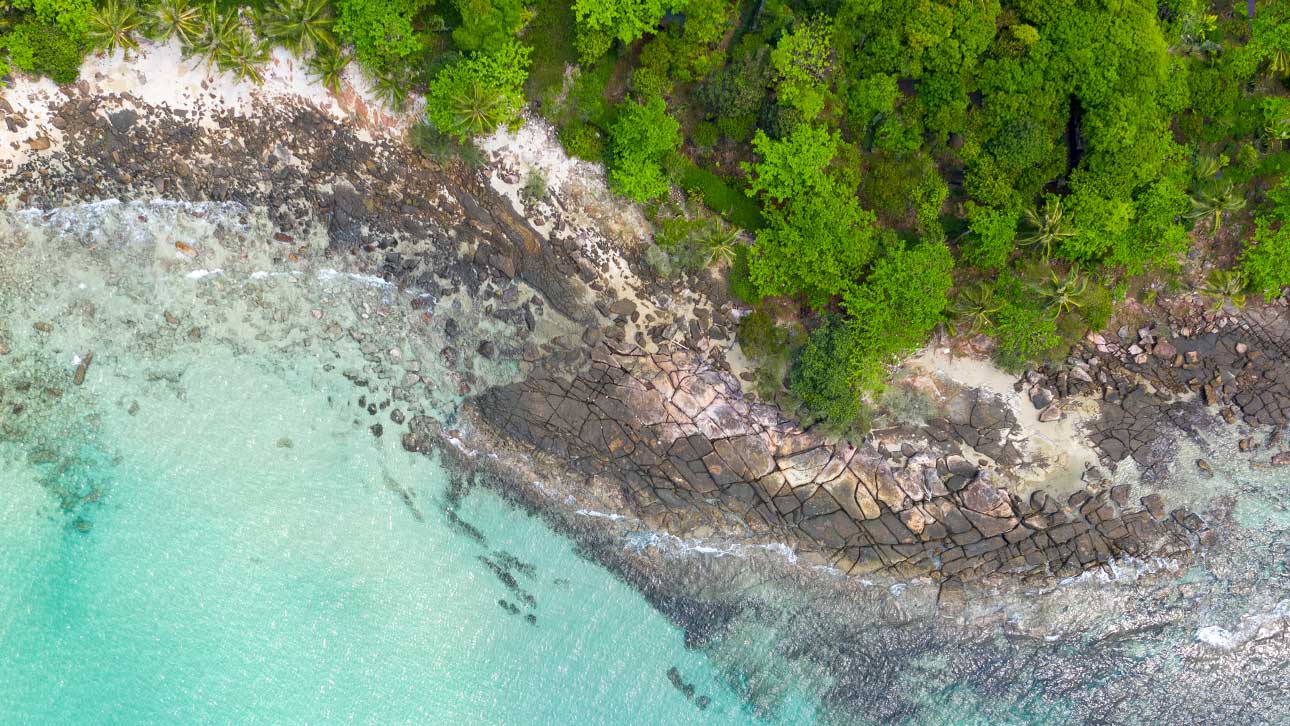
Did you know there is an island so completely “offline” that it exists outside tourist routes, outside Instagram, and outside the idea of “maybe I’ll visit one day”?
North Sentinel Island, part of the Andaman Islands, is one of the very few places on Earth where the greatest adventure is, in fact, to respect the boundary and keep your distance. Not because it isn’t beautiful – but because it is home to a community that has chosen independence for centuries (and likely for millennia), and the world around it has accepted one simple rule: “do not disturb them”.
Picture a green dot in a vast blue sea, with dreamlike beaches and coral reefs – but no harbour, no hotels, no “Welcome” signs. There is no local tour operator, no café on the shore, no “top 10 things to do”. And that is exactly what makes its story so magnetic: in an age where almost every corner of the planet has been filmed by drones and uploaded online, North Sentinel remains a mystery – not because it cannot be reached, but because it isn’t meant to be.
Advertisement
Did you know this may be one of the most consistent “no” answers in human history?
The people who live there – the Sentinelese – are among the least-known communities on the planet. Not because there is “no information”, but because contact with them is extremely limited and observations are made mostly from a distance. Their language has not been documented, and their population size is not known with precision. This is not a “secret”, but the result of respect for their isolation and genuine concern about introducing disease or risk to a community with no immunity to many of the viruses common in the outside world.
And here comes a rare travel insight: sometimes the most fascinating places are not the ones you tick off a list, but the ones that remind you the world was never meant to be entirely accessible. North Sentinel is such a lesson – quiet, unequivocal, and unique.
Did you know the island’s nature itself seems to guard its secret?
The island is surrounded by reefs and shallow waters that make approaching difficult – not impossible, but naturally restrained, like a slow filter against curiosity. From the air, it looks like dense jungle reaching almost to the shoreline, with surrounding waters often glowing in that tropical blue people chase on postcards. But this is beauty meant to be observed from afar – like a natural reserve of human autonomy.
Because of this combination – natural protection paired with a clear human stance – a strict no-approach policy exists around the island. That means, as a traveller, you are not “missing an attraction”; you are taking part in a rare agreement between the modern world and a community: to exist side by side.
Advertisement
Did you know there are “contact” stories that sound like scenes from an adventure novel?
Over different periods, people have attempted to approach the island – from colonial-era encounters to anthropological expeditions and rare missions conducted from a distance. The most well-known calmer moments in more recent history involved leaving gifts (often coconuts) on the shore and observing from boats. In these situations, the Sentinelese sometimes took what was left behind, while clearly signalling that presence itself was not welcome.
There is something quietly beautiful here: imagine two very different realities meeting at the water’s edge. One accustomed to documenting everything. The other accustomed to protecting everything. And the shared boundary is a silent line: “close enough to see; far enough not to intrude”.
Did you know the most important rule around North Sentinel is “respect”?
At times, the internet turns the island into a kind of mythical trophy for the brave. In reality, this is not a place for challenges, but for ethics. Indian authorities maintain a prohibited zone for a reason: to protect the health and autonomy of the community, and the safety of anyone tempted to approach. Seen through this lens, the story stops being dark – and becomes mature: a story about boundaries that exist for the right reasons.
Put in Travel Inspiration terms: North Sentinel is not a “hidden gem”. It is a “protected story” – one that is told from a distance, with respect, and that is exactly what makes it so powerful. It reminds us that adventure is not always about “going all the way”. Sometimes, adventure is choosing the right end point – one that is beautiful, accessible, and respectful of those who do not wish to be part of our map.
And here is the “did you know” moment that lingers: there is a place on Earth that has chosen not to be visited – and that choice alone makes it one of the most fascinating places you can read about. In the world of travel stories, it is a rare reminder that the best traveller is not the one who goes everywhere, but the one who knows where to stop.







Comments (0)
No comments yet.