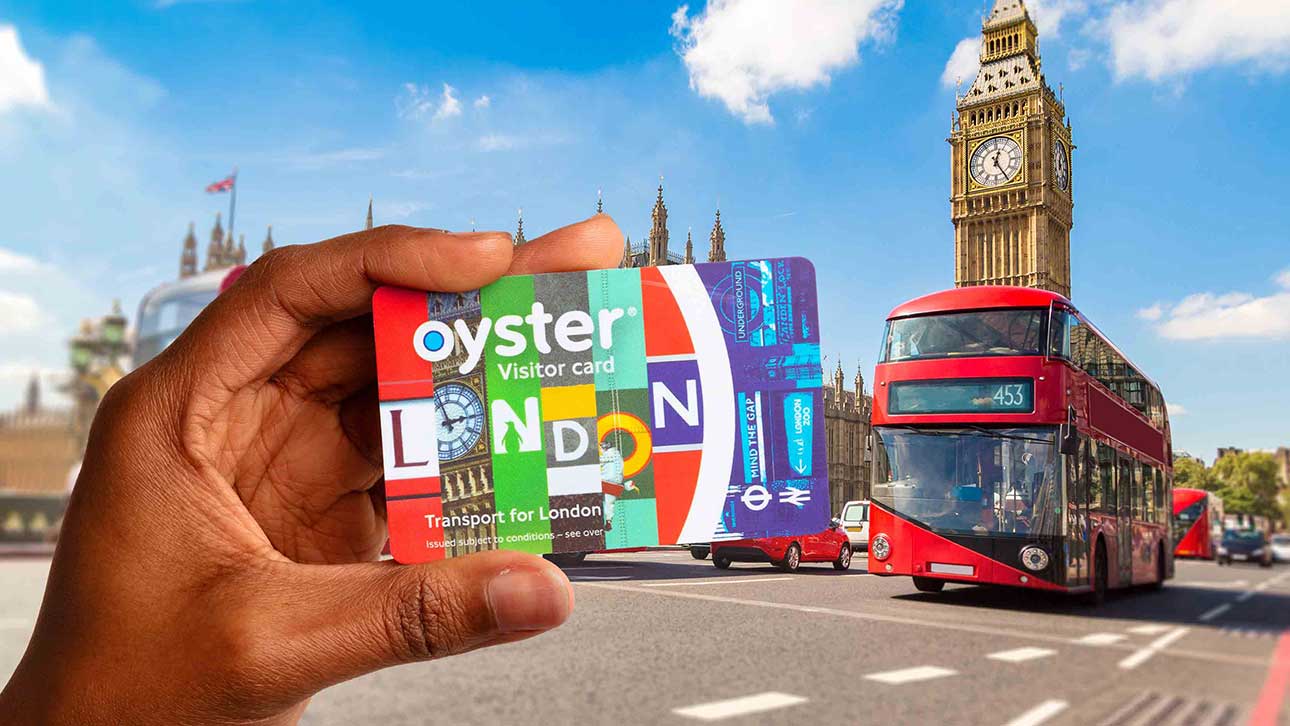
If you’re planning a trip to London and want easy, fast, and better-value transport, the Visitor Oyster Card London is one of the smartest purchases you can make in advance. I used it on the Tube, buses, the DLR, London Overground, and the Elizabeth line, and the daily fare cap (daily capping) helped me avoid paying more than necessary. Best of all: you arrive in the city and can start travelling right away—no queues and no stress about buying tickets or travel cards.
London is a city where you’re on the move all the time. And that’s exactly why, even before I left, I told myself: “Okay, I’m not going to waste my first day hunting for ticket machines, reading rules, and standing in line.” So I bought a Visitor Oyster Card in advance. And honestly—it was one of the most practical decisions of my trip.
Legal information (affiliate disclosure): This article contains an affiliate link. If you make a purchase through it, Travel Inspiration Magazine may earn a commission from the merchant/affiliate network at no additional cost to you. Recommendations are based on personal experience and/or editorial assessment.
What is the Visitor Oyster Card London, and why is it so convenient for tourists?
The Visitor Oyster Card London is a prepaid smartcard for public transport in London. You load it with credit and then simply tap on the yellow card readers—and that’s it. No paper tickets, no “which zone am I in?”, no wondering whether you’re buying the right fare. For a tourist, that’s a huge comfort, because your mind stays on the city, not the logistics.
One more important thing I appreciated in practice: the card has daily capping (a daily fare cap), which means your spending is limited to the best-value daily fare. On days with lots of trips, that can save you money compared to buying single tickets.
Which London transport services I used it on
This was key for me because my routes were varied: the city centre, neighbourhoods, museums, markets, evening walks. The Visitor Oyster Card works on the Tube (London Underground), buses, trams, the DLR, London Overground, the Elizabeth line, and many National Rail services (depending on the line and route). In reality—it covered everything I needed for tourist-style London.
My experience: a stress-free first day in London
I felt the difference most clearly in the first few hours after arriving. That’s usually when things are most chaotic: tiredness, luggage, finding your bearings. With the Visitor Oyster Card, I simply got to the transport and started moving. Tap—and I’m through. No queues, no “where do I buy this?”, no worrying I’ll be delayed.
In London, that’s priceless, because the city is huge and you can’t “do it on foot” alone. One day you might start with a museum, then switch neighbourhoods, hop over to a new viewpoint, and in the evening head back for a theatre show or a restaurant. With that kind of rhythm, the Visitor Oyster Card feels like a “key” to the city.
How the Visitor Oyster Card genuinely helped me (6 reasons)
1) It saves time: you buy it in advance and don’t deal with machines and queues.
2) Better value for money: the daily fare cap (capping) protects you from unnecessary costs when you take lots of trips. Plus, compared with single “cash” fares, it often works out significantly cheaper.
3) It’s extremely easy to use: one habit—“tap”—and everything works.
4) Flexibility: you choose how much credit to load and top up if you need more.
5) Useful for airport transfers: it can also be used for transfers from Heathrow and Gatwick (including express services where applicable, depending on your route).
6) Discounts and extras: there are offers for experiences and services (for example on the Thames) that you can use by showing your card on site.
How do you use the Visitor Oyster Card?
This matters—because if you do it correctly, everything runs smoothly.
Tube, London Overground, and National Rail: tap at the start and the end of your journey.
Buses and trams: tap only when you board.
How much credit should you load onto a Visitor Oyster Card? (my practical tip)
To stay relaxed from day one, I recommend starting with a card loaded with at least £25 in credit. That way, you won’t be thinking about topping up right after landing, and you’ll have the freedom to move around.
Travelling with children: useful rules
Children under 11 travel free on buses and trams. In addition, on the Tube, DLR, London Overground, the Elizabeth line, and some National Rail services, they travel free when accompanied by a fare-paying adult (usually up to four children per adult).
Children aged 11–15 can get 50% off with the Young Visitor discount. Once you arrive in London, go to a Visitor Centre or a staffed Tube station and ask a member of staff to add the discount—the child must be with you.
Would I buy a Visitor Oyster Card on my next trip?
Yes—I really liked the Visitor Oyster Card London: it makes getting around simple, fast, and stress-free.
Buy the Visitor Oyster Card London in advance →
Tip: if you’re landing and want a smooth start on day one, choose a card loaded with at least £25 in credit.
![Български [BG]](/media/mod_languages/images/bg_bg.gif "Български [BG]")
![English [EN]](/media/mod_languages/images/en_gb.gif "English [EN]")